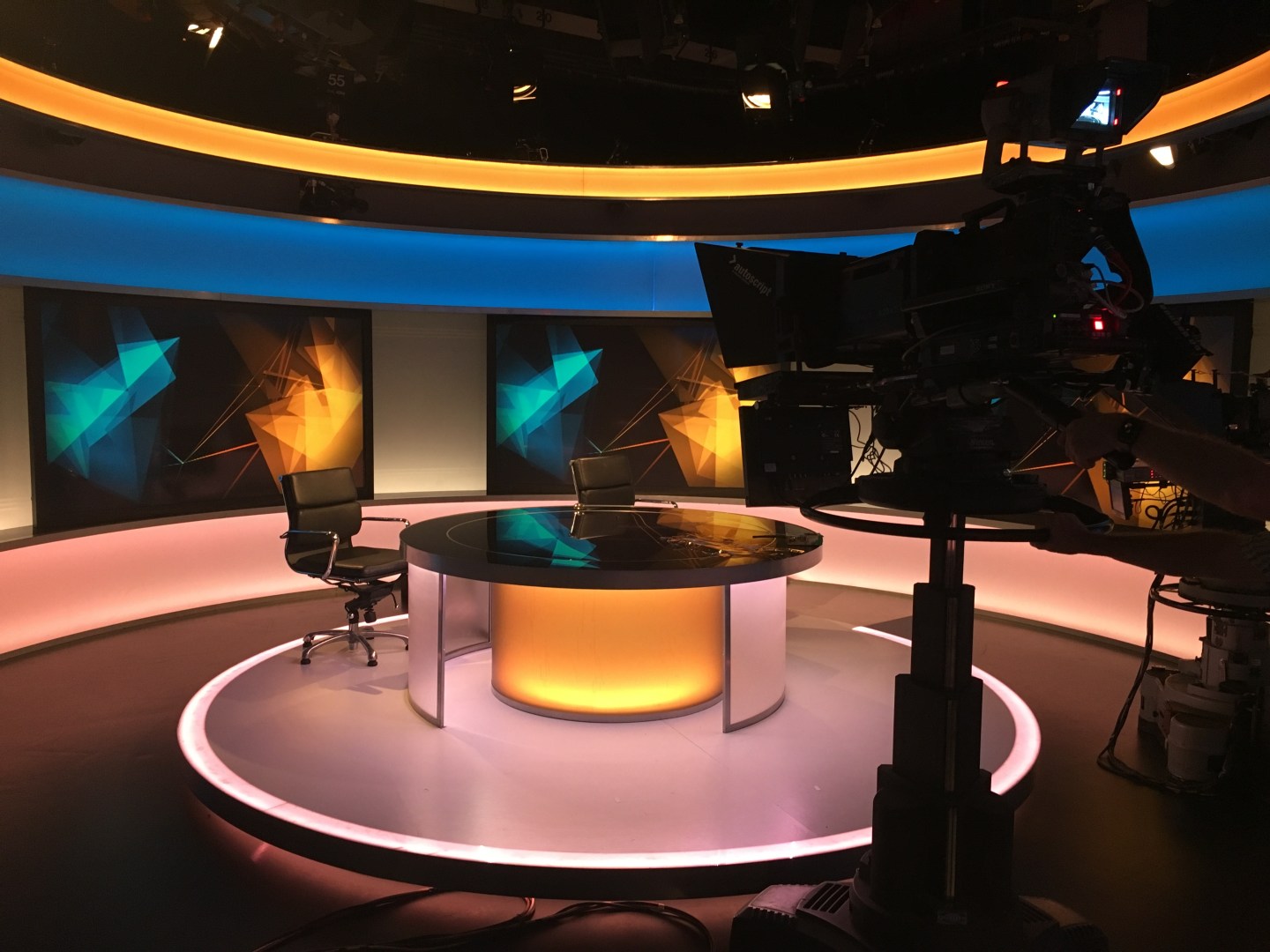
A two-way is what we call an interview with somebody who isn’t in the studio with the presenter. It can be an interview with a guest or a reporter. The shot of the person who is outside the studio is normally fed through the studio monitor.

(If the interviewee is in the studio, sitting next to the presenter, it’s called a one-plus-one.)
Programme producers love reporter two-ways. Why?
- A live two-way is immediate. We can get the very latest on a story.
- A live two-way can place us at the location of a story.
- A live two-way can be made shorter or longer depending on whether the programme is “over” or “under.”
- Live two-ways are cheap. You can do one with a smartphone, if the WIFI is strong.
The reporter needs to be able to hear the presenter in studio. Professional broadcasters have the technology to allow the reporter to hear “clean feed” which means they can hear the producer/director/PA as well, giving timings etc. The reporter should also be able to hear the sound of the programme as well, but this is normally faded out once they start speaking (otherwise they hear themselves with a delay, which is very unpleasant.)
A standard duration for a live two-way is around one minute and thirty seconds plus presenter link. Ninety seconds is enough for three questions: thirty seconds each. This gives us a good structure to work with.*
There’s no special way to write a two-way link, but it would normally end with something like “Our reporter XX joins me now live (from xx).”
One potential formula for questions is:
- Tell us more? (Or “What’s the latest?” if the story is developing.)
- What’s the background? (An alternative might be “What do the other side say?”)
- What’s next?
Watch this two-way with JOMEC student Ifan Davies. Notice that his answers are each around thirty seconds. Notice that he hasn’t learnt his lines. (He hasn’t had time to…) He is looking down at his bullet points each time a question is asked.
Here’s the link and a transcript of the two-way.
It’s very important that you don’t try to memorise your answers. You should work out what you want to say and then write it down as bullet points. It’s fine to glance down at notes, but it’s not good to simply read out the answers. If your answers involve numbers, or a specific quote, it’s fine to look down at your notes to get these right.
The clip below is not real. It’s from a comedy programme called The Day Today. But it shows that you should never invent things in a TV two way.
* (A single question with one answer from the reporter is sometimes called a “rant.”)
 Intro to Broadcast News